
Food-Art-Craft is a project team led by Assistant Professor Koichiro Azuma and developed through the course Art and Design Produce Practice for Opening the University (ADP) in the School of Art and Design at the University of Tsukuba. In the 2025 academic year, students took “food” and “art” as their central themes and carried out the entire process, from research and planning to production and presentation, while focusing on the history, climate, and everyday lives of people in the Tsukuba region.
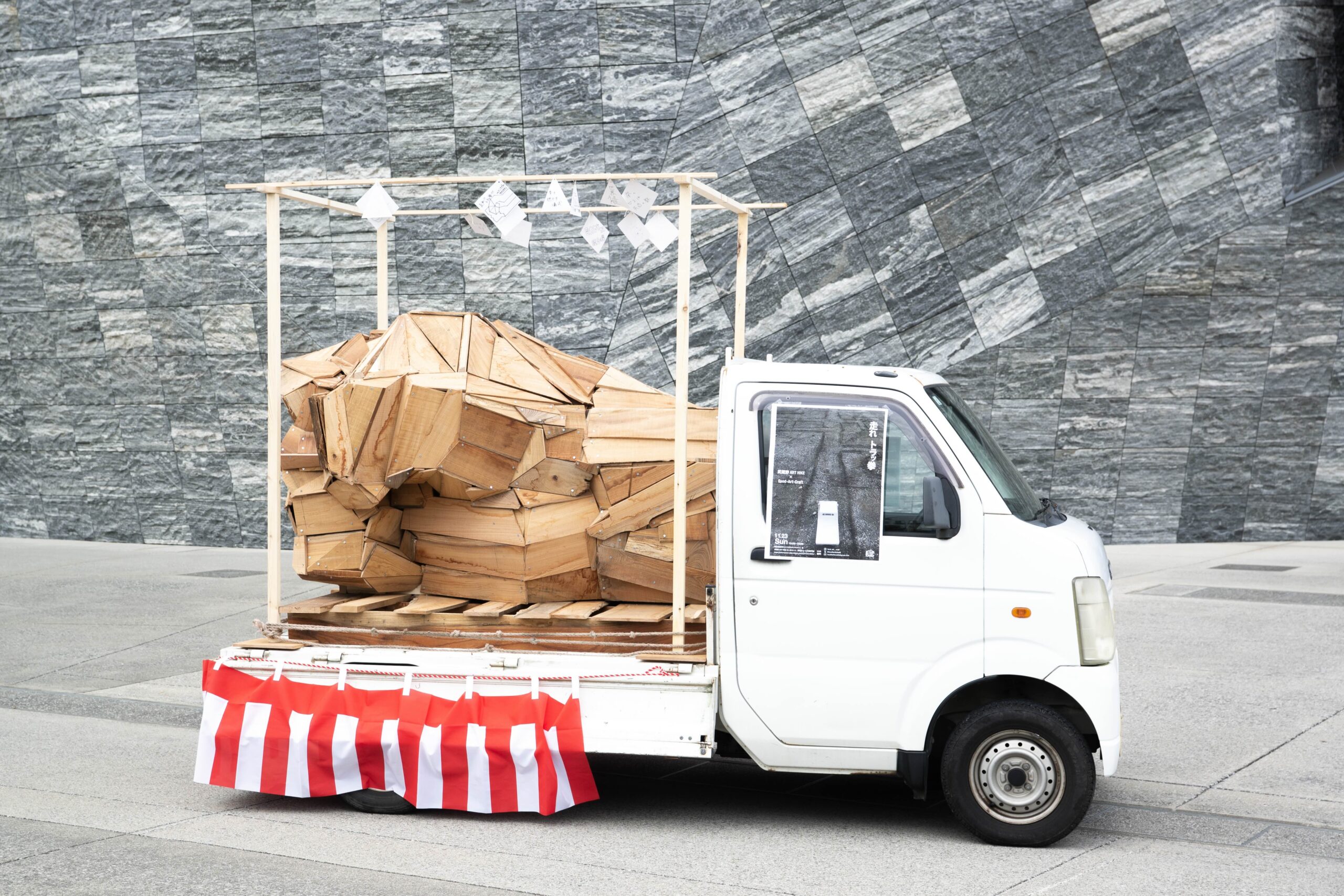
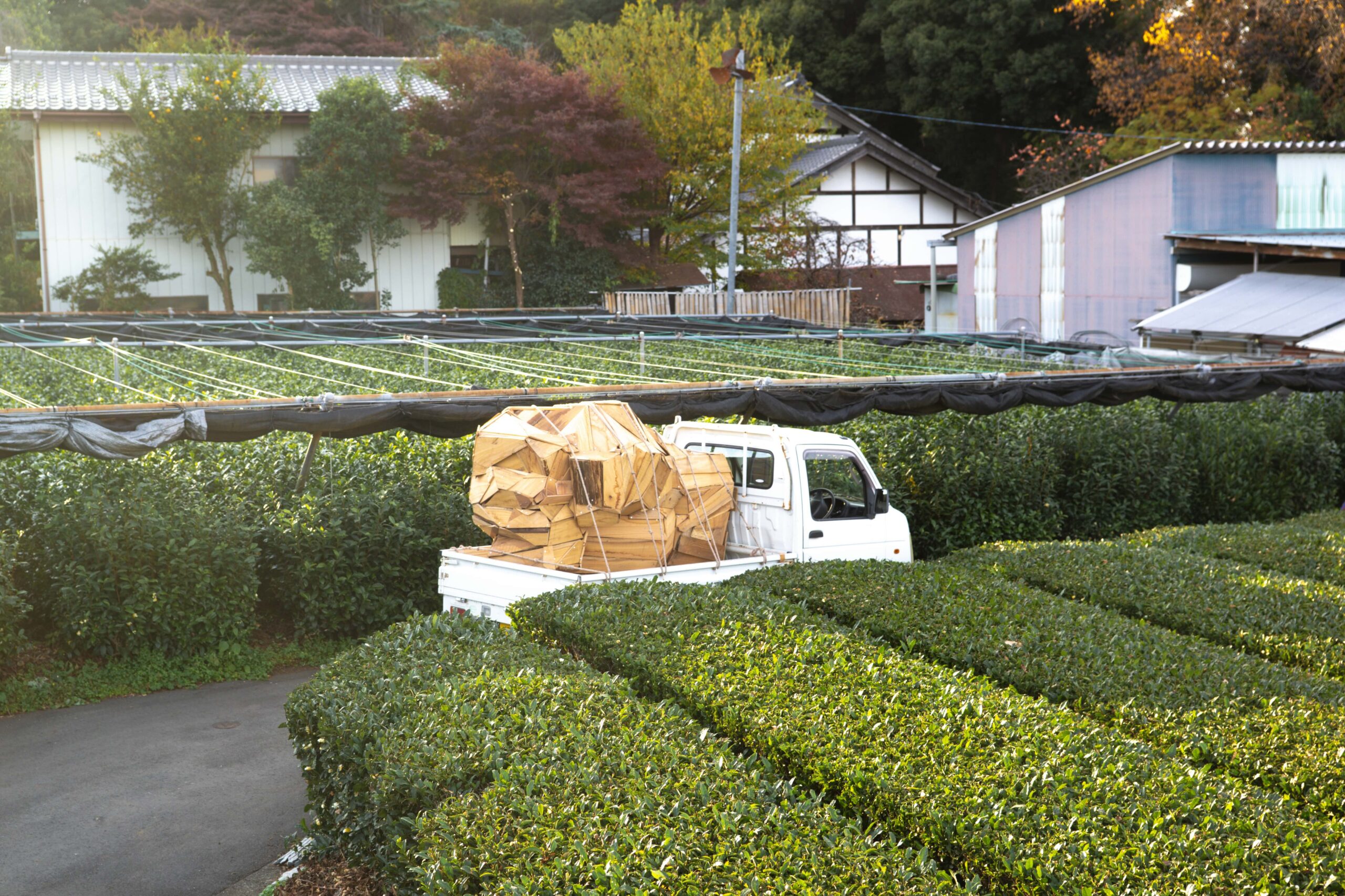
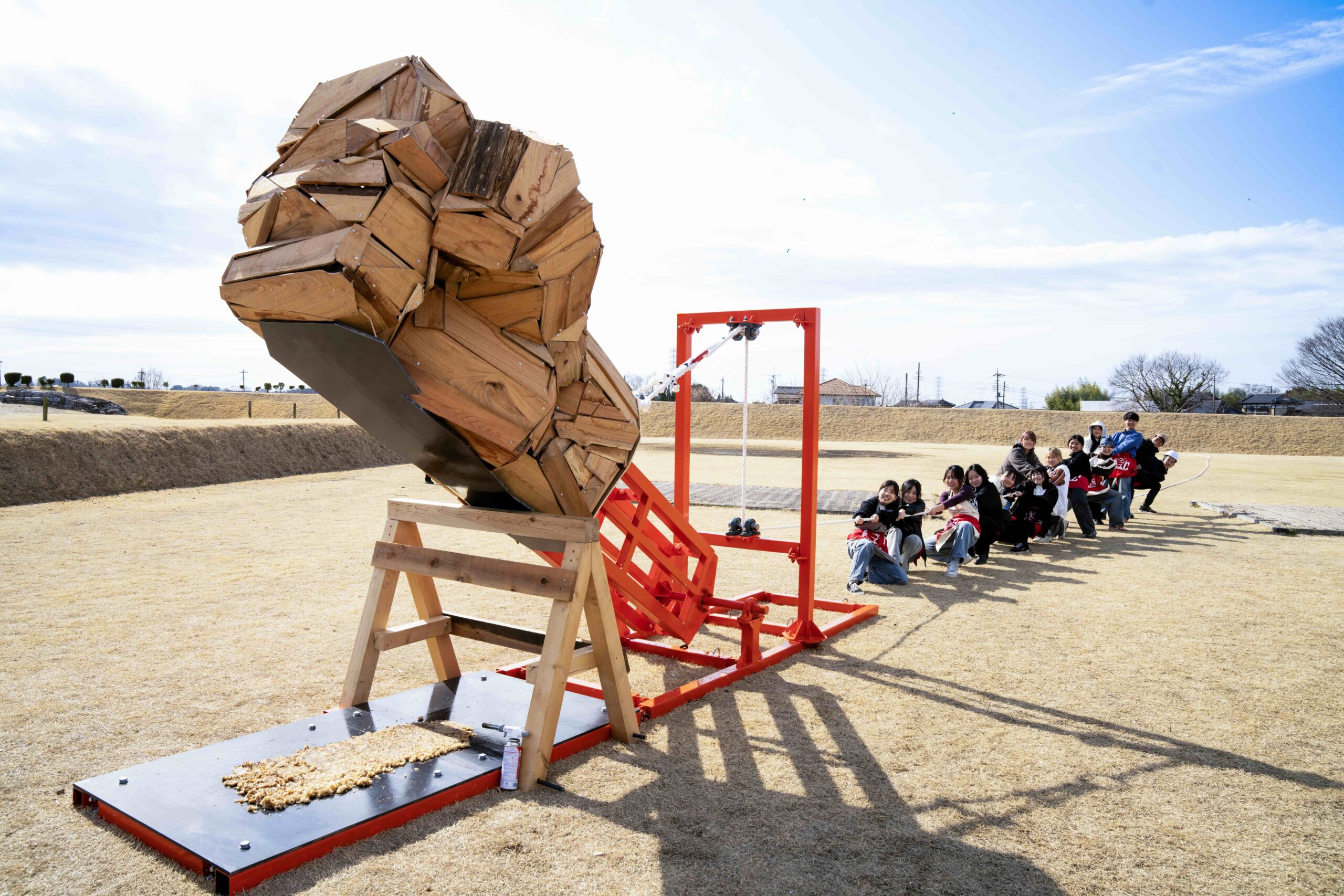
The culmination of Food-Art-Craft’s year-long activities was Giant Rice Cracker Making, a project carried out in collaboration with the Oda area. Based on the local legend of Daidarabotchi, a giant figure said to have shaped the land, the event invited participants to make rice crackers by pressing local rice with a large fist-shaped device.
The aim of the project was to help children learn more about their local area. For that reason, the event did not begin directly with the hands-on activity. Instead, the team first created and performed a puppet play as an introduction, presenting the Daidarabotchi legend in a way that was accessible, familiar, and easy to understand. The story was designed to lead toward a positive ending for the community through the appearance of Daidarabotchi, so that children could feel close to the character. Since the audience was expected to include parents and children, light humorous elements were also woven into the performance so that adults could enjoy it as well.
On the day of the event, strong winds struck the site, and some of the carefully made stage sets were damaged. Yet even this was embraced as “the work of Daidarabotchi,” which in turn strengthened the overall atmosphere and internal logic of the event.
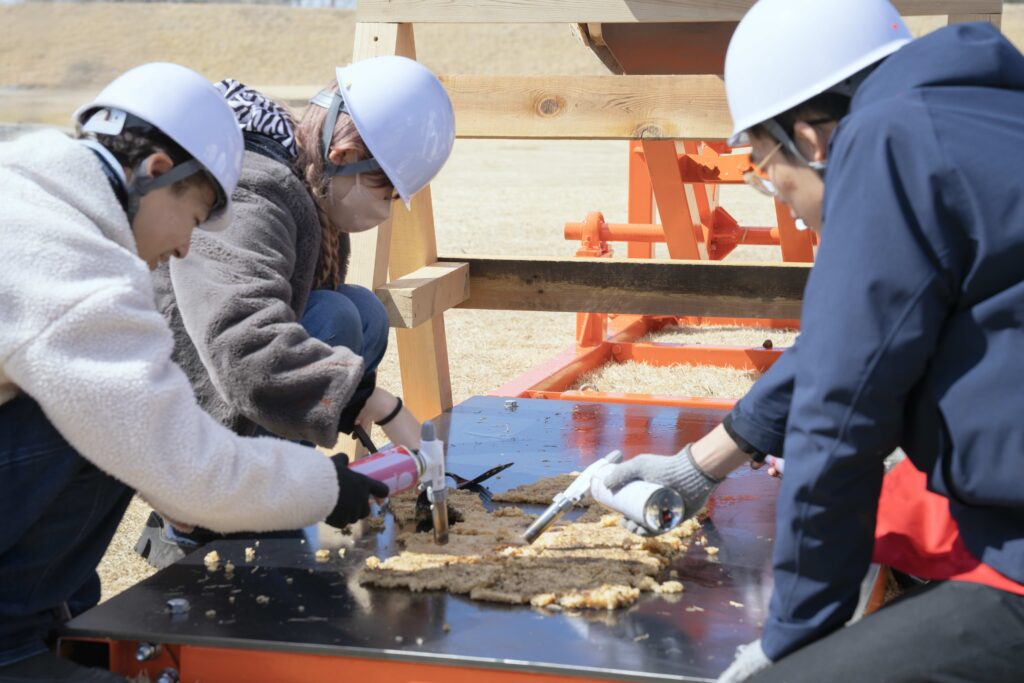
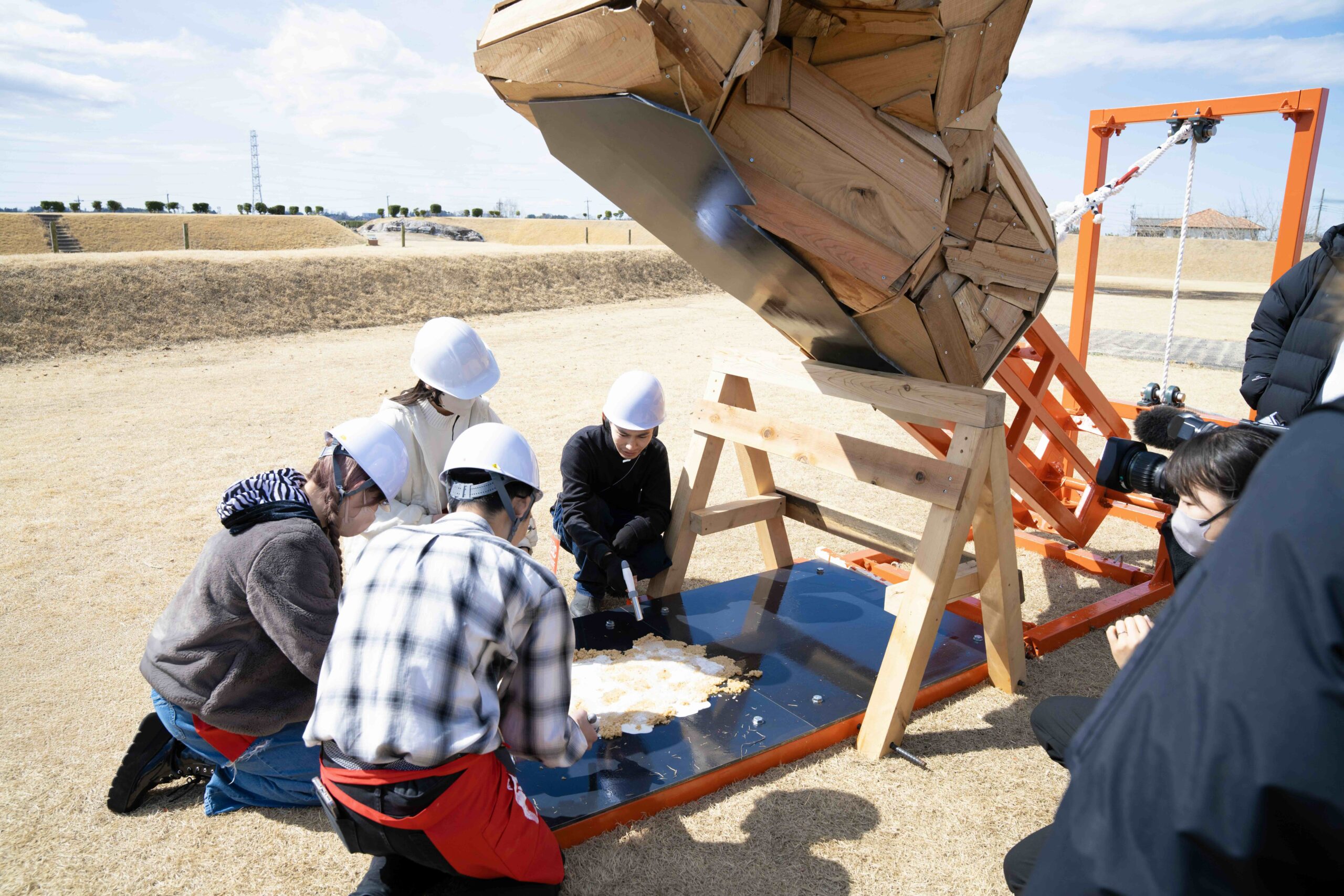
Another central element of the project was the giant fist-shaped device itself. The device consisted of a wooden fist and a steel frame. The wooden fist was formed by attaching zelkova wood to a structural framework, while the steel body was completed through repeated processes of cutting, welding, grinding, and assembly. The production process was far from smooth, and the team encountered various difficulties in adjusting parts and resolving assembly problems. Even so, through repeated trial and error, the device gradually took on a real and workable form.
During the rice cracker making on the event day, the rice was spread out while the fist was raised, then pressed by dropping the fist two or three times. After that, it was finished by directly roasting it with a burner. The real appeal of the project lay in the process itself: a large mass of rice was crushed by a giant fist, roasted, and transformed into something edible. Another distinctive feature of the project was the way a dynamic experience created by a massive device coexisted in the same space with the delicate work of final preparation and cooking.
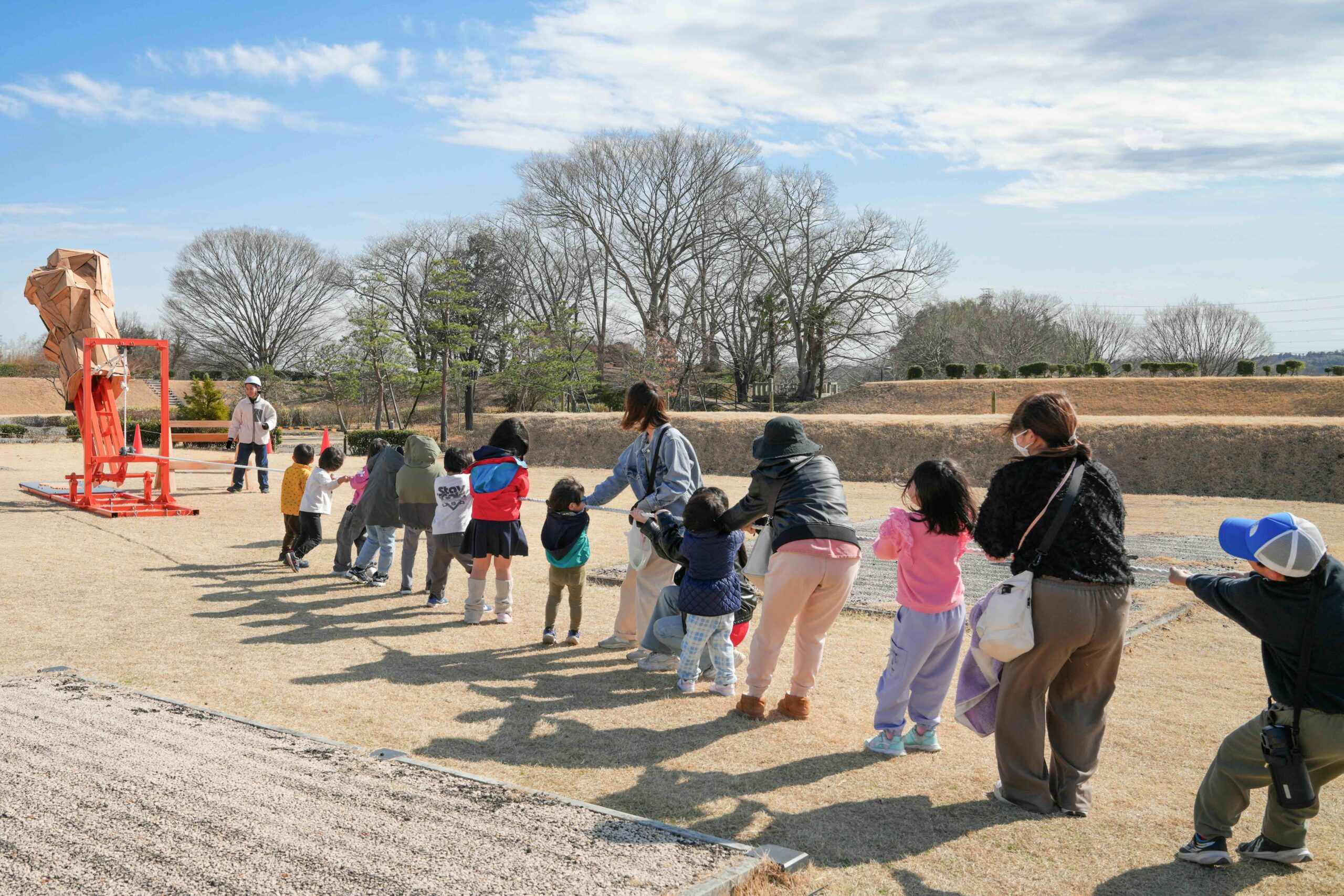
Over the course of the year, Food-Art-Craft sought to rethink art not as something presented merely for viewing, but as a medium that connects people with one another and links people to place. From fieldwork to planning, production, and presentation, the students worked together through collaboration, dialogue, and coordination to bring a single form of expression into society.
This activity not only gave concrete form to the principles of ADP, but also presented one possible model for a project in which creative expression is developed together with a local community.
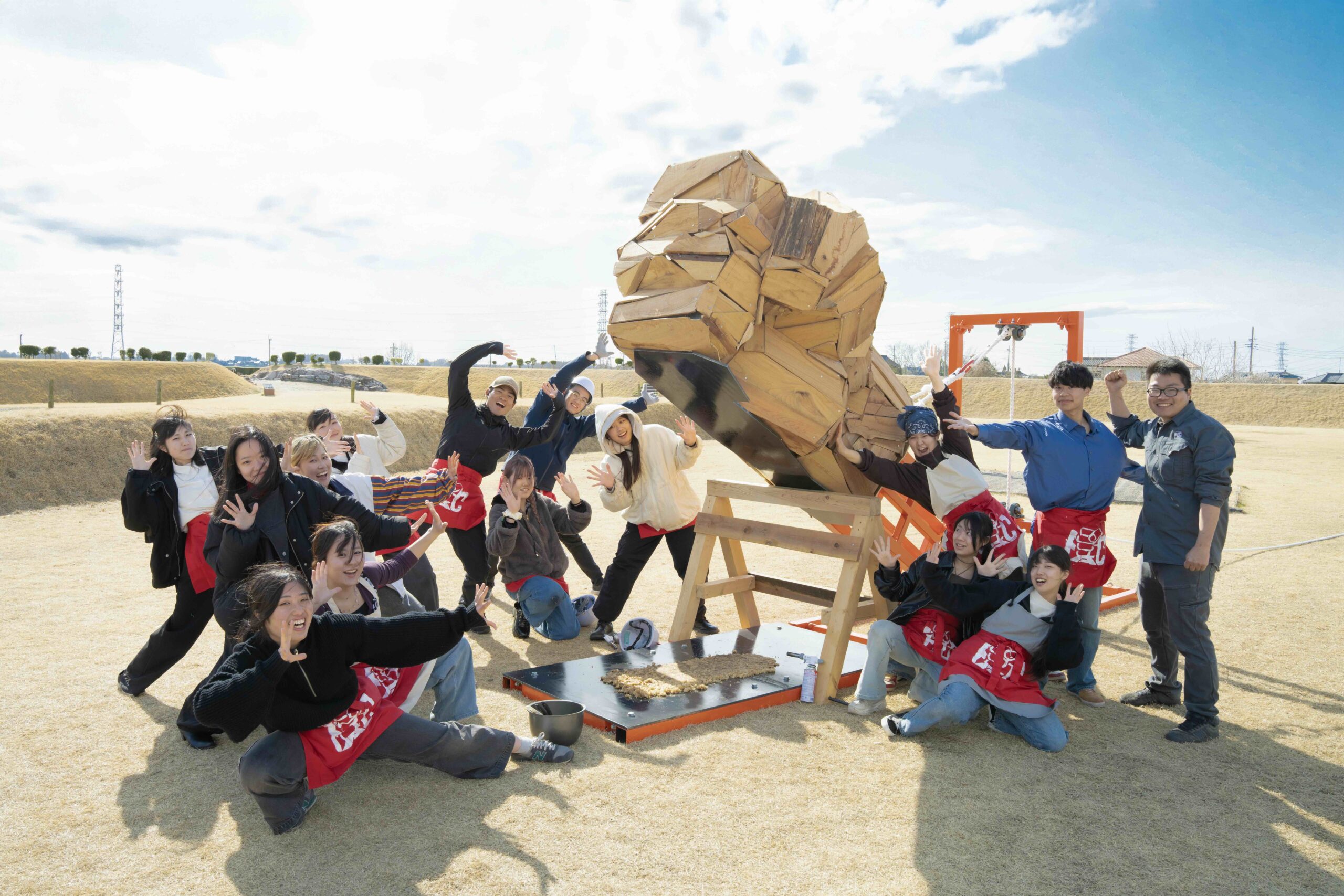
Faculty Advisor: Koichiro Azuma (Assistant Professor, Faculty of Art)
Team Leader: Sota Nakajima
Project Manager: Sara Yamaguchi
Accounting: Hinako Tanzawa
Design / Sculpture: Hodaka Iwao, Ririko Tatematsu, Minato Furubo, Rio Nagase
Sales: Masato Ichiki, Yuria Yanai, Kanna Yamada
Food Management: Ryo Shikiya, Misaki Hasegawa
Public Relations: Koharu Kiriyama, Kana Yoshida
Food-Art-Craft Archive Book
(University of Tsukuba Repository – Tulips)